Where I started
The very first time I used AI, the very first prompt I gave it was "create a 3js website with a rotating cube", and I was absolutely blown away that it could do that. That was the time I thought to myself: "we are fucked."
The fear was that this would disrupt the job market, that it would hurt a lot of people. But never once did I think this was going to replace humans, or that there's no need for humans. Sure, a lot of things are going to get automated, and for a while jobs will disappear for many. But I see that as a good thing, because humans never wanted to do that shit anyway.
If I stay in delusion for a moment and remove the constraint of money (the abstract value we give to everything, which doesn't mean shit), I never liked the idea that you have to do something just for the money. The ideal way to go about life should be: you do something because you love it. The thing you're destined to do. Not wasting time on random stuff, but following the innermost desire of yours that pulls you away from all the negative stuff like procrastination, drugs and doomscrolling.
So here's a question: if the rent was paid and the fridge was full, what would you actually do with your Tuesday?
I imagine a world where you don't worry about money, status and power, and you don't do something for money. And I think most of us would end up doing things that serve others too, because that's how we're wired. People would do all kinds of things. We should not think that humans will have nothing to do.
The biggest win is for the people doing the hardest work. Think about someone who spends every day breaking rocks or digging a road for a daily wage, or a delivery rider on the other side of the world. People who never really got to choose their work. Now give them a powerful AI. There's no language barrier anymore, no wall around information, and suddenly they have access to the same knowledge as a graduate from any university anywhere. That's what I mean by empowering every single human being on the planet, not only the ones who happened to be born near a good school.
Almost every conversation about AI is about what we're going to lose. Why is almost nobody talking about this? If the man on a daily wage can do anything in this world, if money is solved for, maybe he likes gardening? Does he have an interest in stars, or maybe rocks? He would finally have the chance to explore.
So much of human life is just trying to earn the next meal, whether it's hunting and gathering for a tribe, or a table in a 5 star hotel in some part of the world. I believe food should be a solved problem by now, and if it is, with AI and robots, then what's left for us is to do what we love. So why are we so scared of "what will I do?" I will travel the whole fucking universe. That's what I'll do if I have food figured out, and I'll do it myself, personally, thanks to my super intelligent buddy.
Nobody asked him to study frogs
And to think there's nothing left for humans to do? Well, there was never anything for humans to do anyway but survive and reproduce as a species. But as individuals we have curiosity, it took us to places, and it will never die, even if we have all the answers.
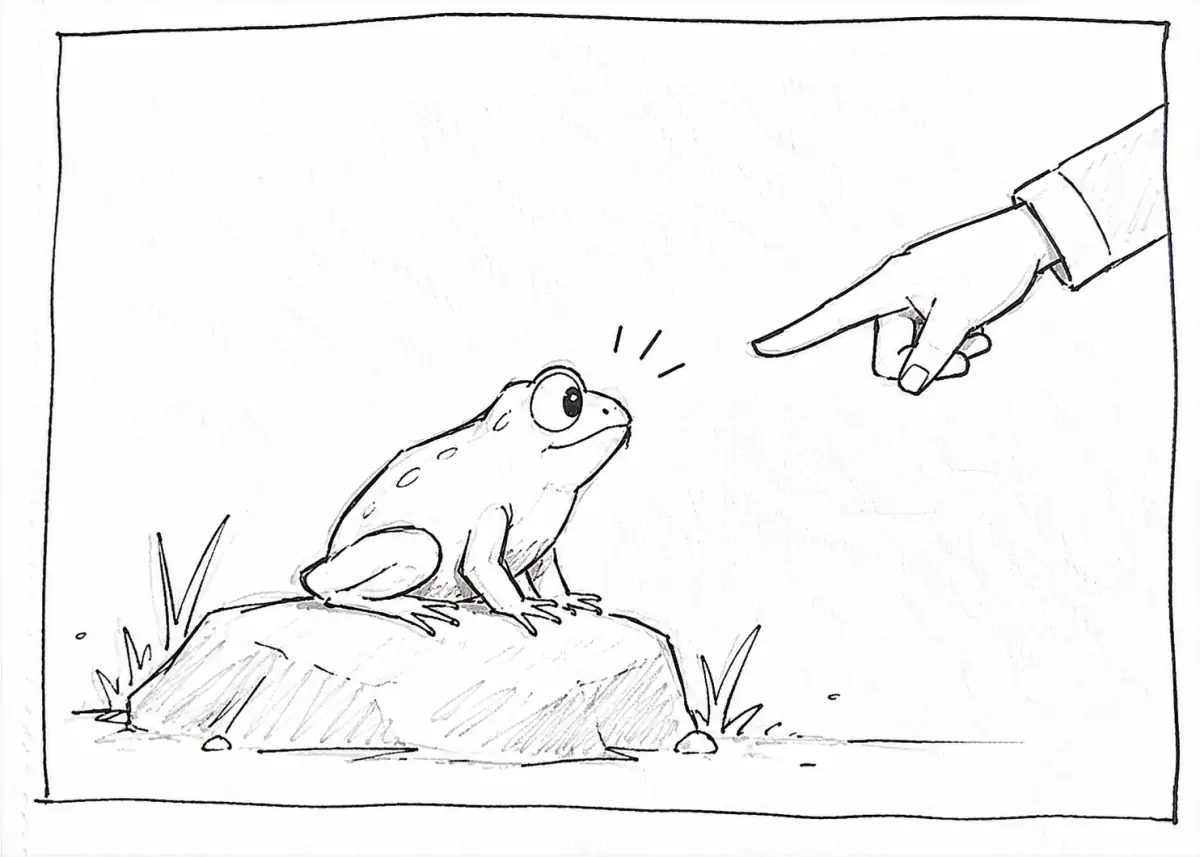
Take one guy. Let's call him the frog guy. Nobody asked him to study frogs. No company, no government, no boss. He saw a frog one day as a kid, something in him clicked, and he couldn't stop thinking about it. He doesn't care about anything else and studies frogs every day, because he loves it. And then one winter he finds something nobody expected: a frog that freezes solid. Its heart stops, it stops breathing, and by every definition we have, it's dead. Then spring comes and it hops away like nothing happened.
Now fast forward. Somewhere else there's another human who can't stop thinking about the human heart. That's his inner calling, saving lives. Nobody told him to either. He comes across the frog guy's work, probably by accident, through AI or the internet, probably while looking for something else. And he thinks: what if we could do that to a person? Years of his own curiosity later, he figures it out. Now a heart that has stopped isn't the end. We can bring people back, even months after.
And there's a third guy who has always looked at the night sky and wanted to go. He just wants to see one particular planet. He's figured out the ship. What he couldn't solve was the trip itself: it takes six years, and a human can't stay awake that long without aging. But the answer is already out there. The frog guy's frozen frogs, the heart guy's way of bringing a body back. He puts it all together, goes to sleep, and wakes up next to his planet.
Three people, three completely different obsessions. Nobody told any of them to do it. What they found connected because it all went into the same shared pool of human knowledge.
So the point in short: AI can be intelligent and can solve a lot of the problems around us. But what makes us human is curiosity, the calling from deep inside, like we're part of this huge universe, it's random, and I don't know why I feel it, but I just love looking at frogs.
Could an AI study a frog? Probably. But who sends it? Somebody has to care enough about frogs to ask the question, and then walk out to a pond and look. Maybe a future AI can make connections from all over the world, but who asks the question, who points it in a direction?
A human.
Not because I have to for money. Money is bullshit. I want to! It's because I love to.
It's not only curiosity
Curiosity isn't the only thing that stays human. We also care about each other.
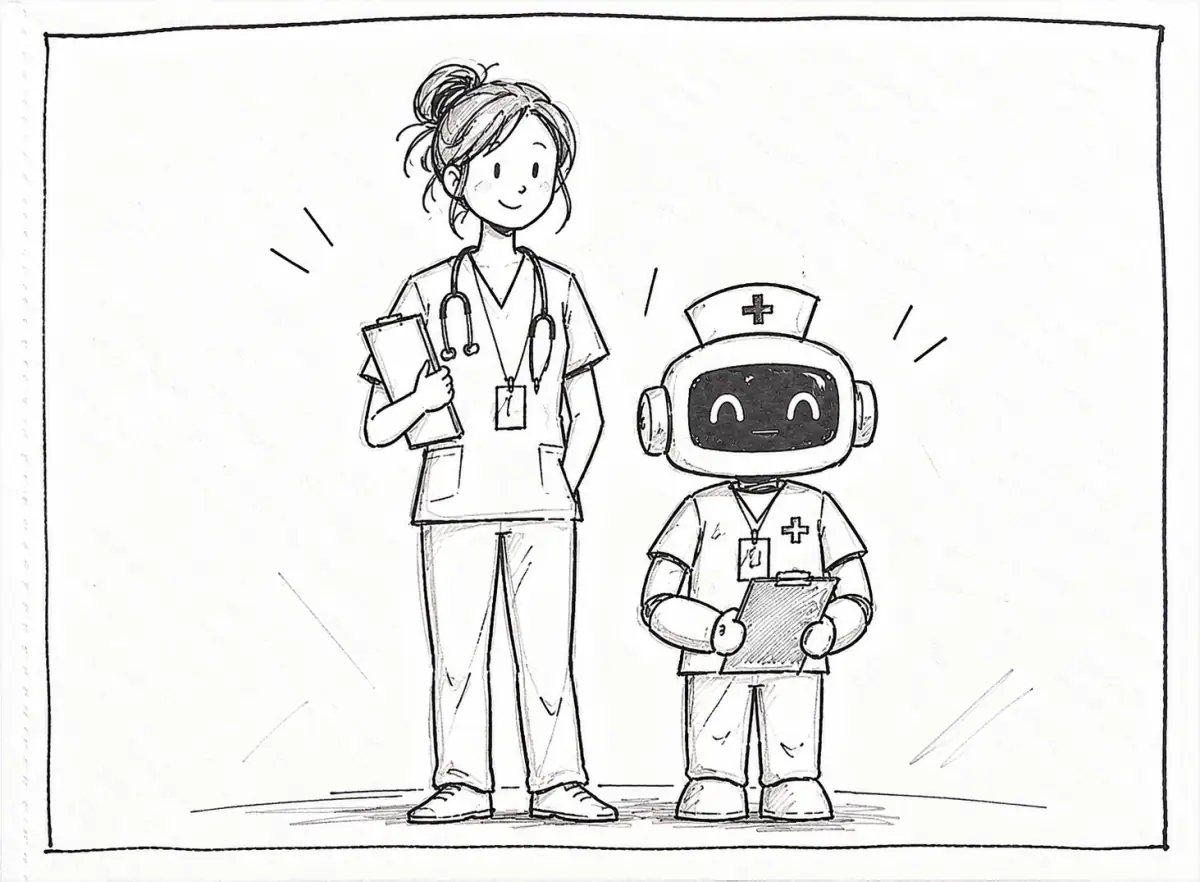
Think about a nurse today. We assume she does it for money. But the truth is it's her inner calling to help people in need and take care of them. Even if there's a super intelligent robot nurse that takes care of people, our nurse will still go to the hospital every single day, not because she has to, but because it's her calling. She loves to help, to connect, to take care of people and make them better. And that's the kind of nurse we need anyway: not someone who has to be there, but someone who wants to be there.
But I'm not naive
I know how this sounds. It's a long shot, it's the ideal version, and it weirdly removes human nature, economics and politics from the equation.
The same AI could do the exact opposite. It could concentrate wealth in the hands of a few, push millions of people out of work and make inequality much worse. That might be where we end up. I don't have a plan for that, and I don't think anyone does yet. So I'm not predicting this future. I'm choosing it. What would it take to get there?
The future I want to build
It's one where a human imagines something and then makes it a reality. Not alone, but through collaboration with others, through staying curious, understanding things more deeply and doing the thinking ourselves, not asking AI to do the thinking. With super intelligence around, humans should have a bigger brain in a decade, not a shrunken one. And I worry that's exactly what will happen if we keep staring at a chat bot that kills creativity, curiosity, ideas and connecting dots.
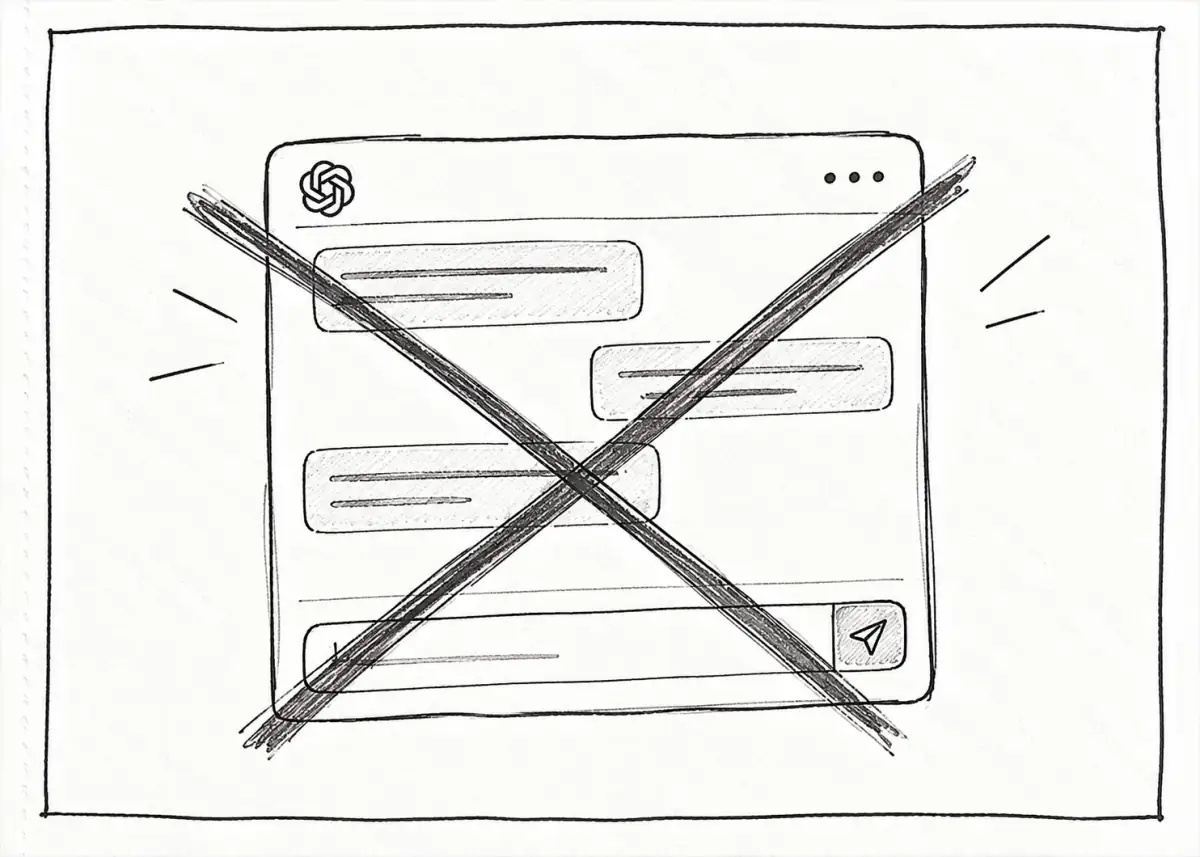
Right now most of us use AI like this: ask a question, get an answer, move on. The answer is the end. But what if the answer is just the beginning? One idea leads to another and another, until you find something you weren't even looking for when you started. That's how the frog guy found his frog.
So the first step towards this future is thinking with AI, and that's what I'm building. Visual Pathways AI is a way to interact with AI that makes you curious, asks you questions, lets you make notes and uses your full brain to solve problems. It doesn't do that by putting you in a box and handing you a scrolling answer. It lets you explore the infinite universe, with the help of an infinite canvas.
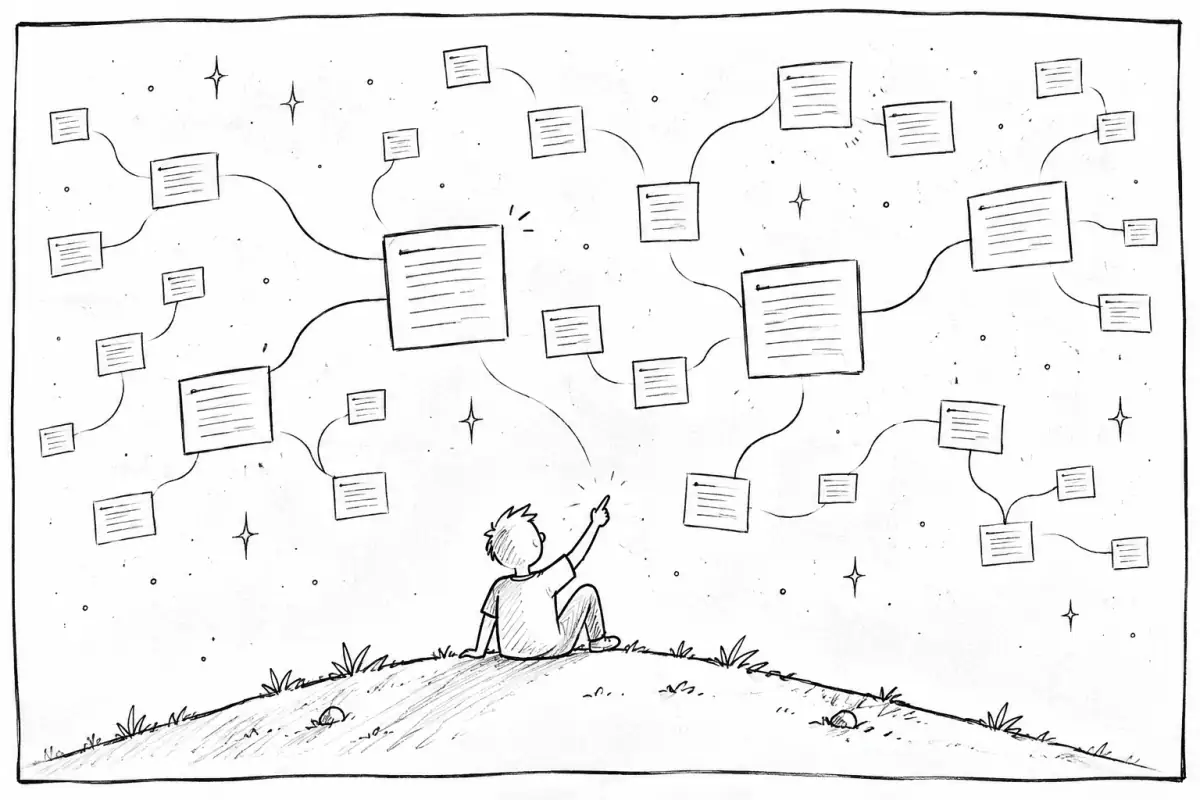
I don't know if the future I've described will ever exist. A lot has to go right for it. But I know which direction I want to build in, and it's not the one where AI does all the thinking for us. Give it a try. Ask it something you're curious about and see where it goes.
Try it yourself
Ask a question and watch it become a canvas. Free to start — no credit card.